


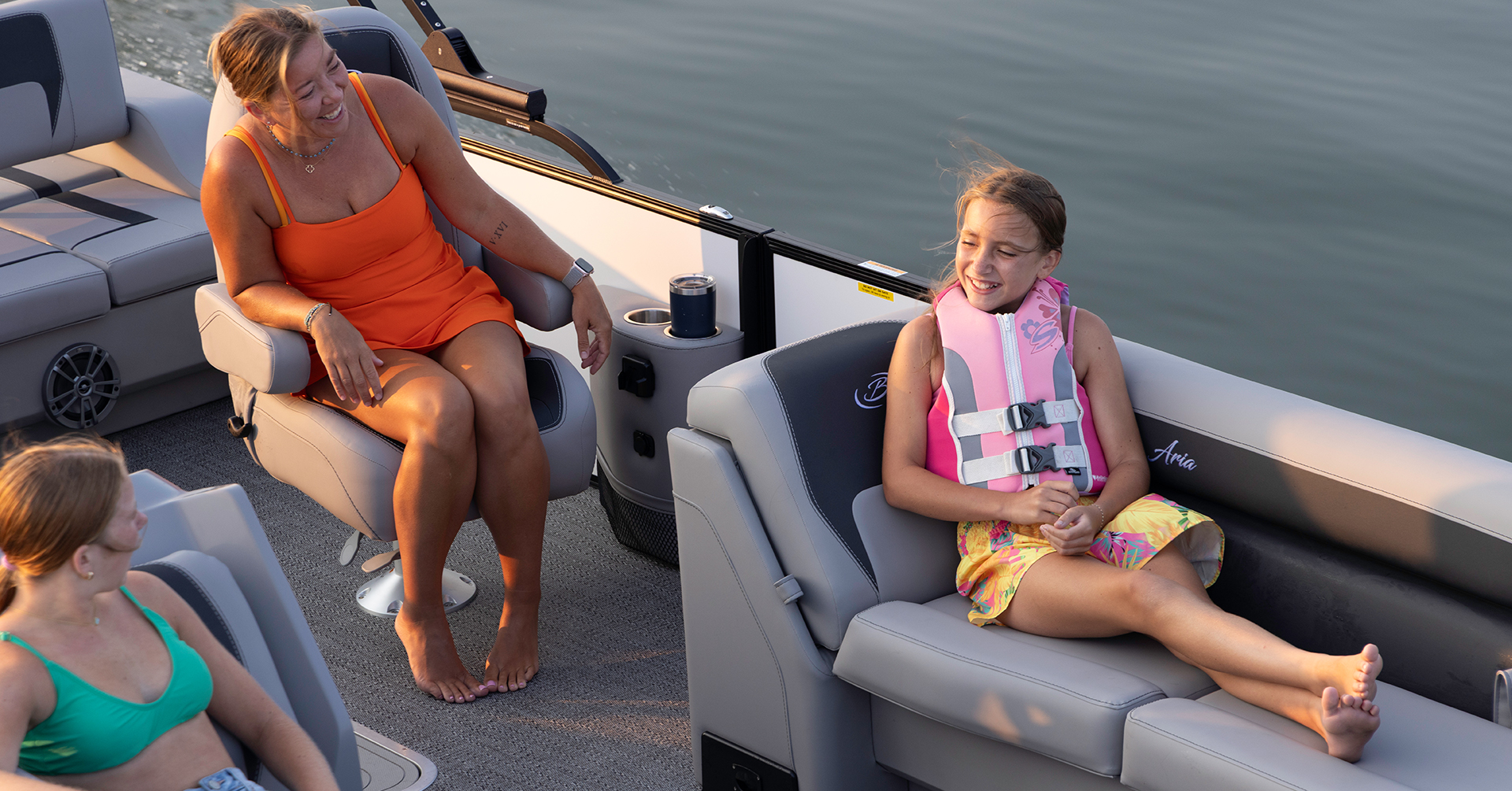
Selecting the proper personal flotation devices (PFDs) is the single most critical safety configuration a captain must manage before casting off. Across the Southeast’s premier inland waterways—whether navigating the high-density holiday traffic of Lake Lanier, tracking deep-water lines on Lake Allatoona, or maneuvering the expansive shorelines of Lake Martin, Lake Oconee, and Lake Keowee—maintaining regulatory compliance and absolute passenger safety requires a disciplined understanding of life jacket classifications and fitment variables. Carrying inadequate, dry-rotted, or improperly sized vests introducing severe immediate liability.
By treating your PFD inventory as specialized marine hardware, you can ensure your vessel is completely turn-key for any operational environment.
1. Match the PFD Classification to Your Operational Environment
The U.S. Coast Guard categorizes life jackets into five distinct structural types based on their buoyancy ratings, performance characteristics, and intended water conditions.
- Type I (Offshore Life Jackets): Engineered for extended survival in open ocean swells and remote coastal zones where rescue operations may be delayed. Providing the maximum buoyancy allocation, Type I vests feature a bulky, high-displacement design specifically tailored to turn an unconscious wearer face-up in heavy sea states.
- Type II (Near-Shore Buoyant Vests): Designed for inland water navigation where a swift rescue is highly probable. While less bulky than offshore configurations, Type II vests are still engineered to turn an unconscious swimmer face-up in the water column. This type is a highly popular, easily stowable choice for meeting standard statutory requirements.
- Type III (Flotation Aids/Sport Vests): The definitive standard for active recreational boating, including wakeboarding, watersurfing, and tow-sports. Type III jackets feature a form-fitting, front-entry design optimized for maximum torso mobility. Note that Type III vests are designed specifically for conscious, alert wearers and will not reliably turn an unconscious swimmer face-up.
- Type IV (Throwable Devices): Non-wearable, immediate-use throwables such as horse-shoe rings or buoyant cushions. Every vessel over 16 feet in length is legally required to carry a Type IV device instantly accessible at the helm station. Technical Directive: Avoid utilizing throwable cushions as standard deck seating, as continuous compression breaks down the internal foam cells, destroying its rated buoyancy over time.
- Type V (Special-Use Devices): Highly specialized, low-profile PFDs engineered for explicit activities like whitewater rafting, sailing harnesses, or automatic CO2 inflatable vests. Type V devices must be worn continuously to meet regulatory carriage requirements.
2. Meticulous Sizing and Weight-Distribution Verification
A life jacket's safety rating is completely compromised if it is improperly fitted to the physical displacement of the wearer.
- Verify Manufacturer Weight Brackets: Every approved PFD features an internal stamp detailing its exact weight and chest-size parameters. Never assign an adult-rated vest to a minor passenger; a vest that is too large will instantly ride up over the face and slide off upon impact with the water column, while an undersized vest will fail to provide sufficient buoyancy to clear the mouth from the water line.
- The Cinch and Lift Physical Drill: To guarantee a correct fit, secure all zippers, buckles, and webbed straps tightly around the passenger's torso. Place your hands under the vest’s shoulder straps and lift upward firmly. If the jacket slides upward past the wearer’s ears or chin, the cinch lines must be tightened further or the passenger must be fitted with a smaller shell size.
3. Rigorous Offseason Structural Audits
Inheriting old hardware when acquiring a pre-owned watercraft or pulling vests from long-term winter storage requires a line-by-line inspection before staging them in your deck lockers.
- Material Integrity Inspections: Inspect the outer nylon or neoprene shells for tears, split seams, or UV-bleaching. Squeeze the internal flotation foam firmly; if the foam feels brittle, crumbles, or exhibits permanent compression pockets, the structural cell matrix has failed.
- Hardware Lifecycle Analysis: Ensure all impact-resistant plastic buckles click cleanly into their receivers and that zippers actuate smoothly without salt or mineral binding. Immediately discard any vest exhibiting torn webbing, frayed straps, or signs of mold and mildew growth.
4. Carriage Laws and Strategic Stowage Discipline
U.S. Coast Guard and state marine police regulations mandate carrying a minimum of one properly sized, wearable PFD for every individual currently on board the vessel.
- The Accessibility Standard: Legally, life jackets must be "readily accessible." This means they must be stored in open configurations where they can be deployed within seconds during an emergency. Leaving PFDs sealed inside their original plastic retail packaging or locked beneath heavy cargo gear inside deep floor lockers violates maritime safety laws.
- Minor Passenger Statutes: State laws across Georgia, Alabama, and South Carolina strictly mandate that children under a specified age must wear an approved PFD at all times while the vessel is underway. Review your regional variations before leaving the launch lane.
Technical Frequently Asked Questions
What is the primary operational mistake captains execute regarding life jacket maintenance?
The most severe failure involves stowing wet, saturated vests directly into unventilated fiberglass lockers at the end of the day. Trapping moisture inside a hot compartment triggers rapid mold growth, which rots the structural webbed straps and degrades the buoyancy foam.
Can I utilize inflatable Type V PFDs for high-speed tow-sports like wakeboarding?
No. Automatic or manual inflatable PFDs are strictly prohibited for high-impact activities like wakeboarding, tubing, or personal watercraft operation. The force of a high-speed fall can cause accidental inflation or damage the CO2 cylinder, making durable foam-filled Type III vests the required standard.
Sourcing Factory-Authorized Safety Hardware
Outfitting your watercraft with professional-grade safety gear ensures total regulatory compliance and crew protection.
- Premium Pro Shop Safety Gear: Visit our dedicated Pro Shop to procure high-mobility Type III sports vests, tournament-grade life jackets, automatic inflatable PFDs, and immediate-use safety throwables.
- Certified Systems and Diagnostic Care: If your vessel requires a pre-season systems baseline audit, or if your bilge loops require professional calibration, schedule a diagnostic checkup with our factory-certified technicians at our Service - Buford, GA department.
- Genuine OEM Component Sourcing: For operators performing routine personal upkeep, our local Parts - Buford, GA counter supplies factory-direct filters, sacrificial anodes, specialized hardware, and genuine maintenance fluids.
- Propulsion Overhauls and Optimization: If your aging power plant lacks the reliable low-end torque needed to tow athletes safely, consult our authorized Repower Mercury - Buford, GA or Repower Yamaha - Buford, GA specialists to restore your mechanical advantage.
Corporate Allocation and Asset Management
What structural credit frameworks exist for purchasing a new or pre-owned vessel?
Our specialized Financing office provides tailored credit options, allowing you to seamlessly bundle your choice of high-performance modern hull, reliable outboards, and comprehensive Marine Insurance packages into a single plan.
Can I leverage my current watercraft as trade equity to fund an upgrade?
Yes. We coordinate transparent, market-accurate asset evaluations through our Sell / Trade division, making it highly efficient to liquidate your old hull and apply that value directly toward our curated inventory of premium New Boats or strictly inspected Used Boats.
How do I track upcoming dealer events or connect with Singleton Marine?
To learn about our corporate footprint serving Southern mariners across Georgia, Alabama, and South Carolina since the late 1980s, visit our About page. You can monitor upcoming captain safety workshops and regional consumer rendezvous on our Events page, track continuous technical maintenance guides on our Blog, or see verified customer feedback on our Reviews page. To review your long-term mechanical coverages, check our Extended Service Contracts checklist, and find current promotions on our Specials page. For showroom maps and operating hours across all our regional hubs, visit our Contact page.