
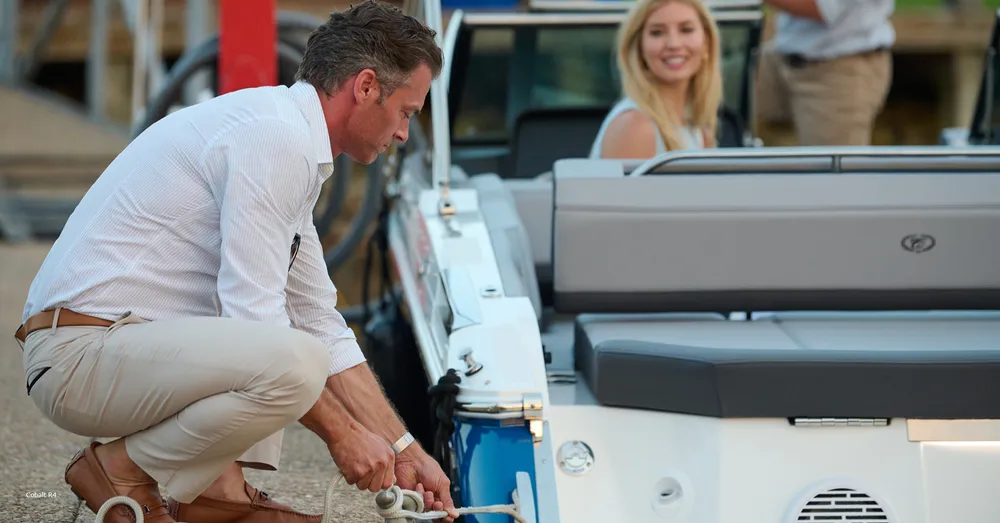
Mastering the fundamental geometry of marine knots is a non-negotiable core skill for any proficient captain. Across the Southeast’s premier inland waterways—whether managing assets on the high-density open water of Lake Lanier, tracking deep-water corridors on Lake Allatoona, or operating across the expansive networks of Lake Martin, Lake Oconee, and Lake Keowee—relying on improper, slipping, or jammed lines introduces immediate risk to your vessel and crew. A poorly tied rope can lead to catastrophic dock damage or runaway watercraft, while an overly complex knot can jam under tension, preventing a swift release during an emergency.
By treating your lines as structural extension systems, you can secure your vessel with absolute confidence using these five essential marine knots.
1. The Anchor Hitch (Anchor Bend)
Securing your high-tensile anchor rode to the galvanized bow shackle requires a specialized knot engineered to withstand continuous load cycling and heavy wake vibrations without loosening.
- Mechanical Application: The anchor hitch provides a secure, permanent connection that maintains its rated tensile strength even when submerged in soft mud or clay for extended periods.
- Execution Protocol: 1. Pass the working end of your nylon line through the anchor shackle eye twice, creating a loose, double-wrapped parallel collar around the metal.
2. Take the working tag end behind the standing main line and pass it cleanly through both of the initial loops.
3. Cinch the line down firmly to lock the wraps against the shackle shank.
4. Complete the structure by wrapping the tag end around the standing line once more, tucking it under the new loop to form a half-hitch backup.
2. The Cleat Hitch
The definitive standard for securing a hull to transient docks, fuel piers, or boat lifts. A properly executed cleat hitch holds fast under heavy lateral wake energy, yet can be undone instantly under load without jamming.
- Mechanical Application: This knot balances friction and direction changes across the cleat's horns. Avoid the common amateur mistake of piling on multiple redundant wraps, which clutters the line and slows down an emergency release.
- Execution Protocol:
- Route the incoming mooring line completely around the base of the cleat, wrapping past the far horn first to absorb the boat's primary momentum.
- Pull the line diagonally over the top of the cleat body, wrap it under the near horn, and bring it back over the top to form a clean figure-eight pattern.
- Form an underhand loop with the working tag end, twisting it so the free line is pinned beneath the cross wrap.
- Drop this locking half-hitch over the near horn and pull the free end taut to compress the knot.
3. The Bowline
Commonly referred to as the "King of Knots," the bowline forms a secure, non-slip loop at the end of a line. It is highly valued because it maintains its structure under immense load, yet releases effortlessly once the tension is removed.
- Mechanical Application: Use the bowline to attach secondary mooring lines, rig temporary towing bridles, or extend lines when joining a sandbar raft-up.
- Execution Protocol:
- Establish a small, structural loop (the "rabbit hole") in the standing line a few feet from the working end, ensuring the active line sits on top.
- Pass the working tag end upward through the loop from the bottom.
- Route the tag end completely behind the main standing line, wrapping around its axis.
- Pass the tag end back down through the initial loop in the opposite direction.
- Hold the tag end parallel to the loop side and pull the main standing line firmly to cinch the knot lock into place.
4. The Clove Hitch
A highly efficient, light-duty utility knot designed for securing a line to a cylindrical structure, such as a bow rail, wakeboard tower tube, or vertical piling.
- Mechanical Application: The clove hitch relies on constant tension along the line to hold its grip. Because rocking or twisting can cause it to slip, treat it strictly as a temporary fastening solution, such as hanging high-impact fenders before entering a marina.
- Execution Protocol:
- Wrap the working end of the line completely around the target rail or piling structure.
- Bring the line around a second time, crossing directly over the top of your initial wrap to form an "X" shape.
- Pass the working tag end back underneath the second wrap, positioning it parallel to the first line.
- Pull both ends of the rope simultaneously to lock the clove hitch firmly in place against the structural cylinder.
5. The Figure-Eight Knot
The quintessential "stopper knot" utilized to prevent a line from slipping through blocks, fairleads, or deck eyelets.
- Mechanical Application: Unlike a standard overhand knot, the figure-eight creates a bulky, distinct block that will not jam tightly under high load, allowing it to be picked apart easily even after heavy stress.
- Execution Protocol:
- Form a clean loop near the working end of your line.
- Route the tag end completely behind the main standing line axis.
- Bring the tag end back over the top and pass it forward through the front face of the initial loop, tracing a clear figure-eight pattern.
- Pull both ends smoothly to compress the rope into a solid, structured block.
Technical Frequently Asked Questions
Why is a clove hitch considered unsafe for overnight mooring applications?
The clove hitch relies on consistent, directional tension to maintain its grip. When a boat rocks, slacks its lines, or encounters twisting forces from shifting winds or wakes, the knot can easily work itself loose, making it unsuitable for securing a vessel unattended.
What is the primary operational cause of a jammed cleat hitch?
Jammed cleat hitches are almost always caused by adding multiple redundant wraps over the locking hitch, or omitting the final half-hitch twist. This wraps the rope over itself under high tension, making it incredibly difficult to clear quickly during an emergency.
Sourcing Authorized Marine Gear & Systems Support
Maintaining absolute command on the water requires outfitting your hull with premium rigging lines and hardware calibrated to exact factory tolerances.
- Premium Pro Shop Rigging Options: Visit our dedicated Pro Shop to procure high-tensile, double-braided nylon dock lines, premium anchor rodes, galvanized shackles, and Coast Guard-approved safety equipment.
- Certified Multi-Point Systems Audits: If your windlass assembly jams, or your steering and throttle controls exhibit mechanical play during close-quarters maneuvers, schedule an inspection with our factory-trained technicians at the Singleton Marine Service - Buford, GA division.
- Propulsion System Modernization: For captains managing aging outboards that lack responsive low-end torque or modern digital binnacles, our authorized Repower Mercury - Buford, GA and Repower Yamaha - Buford, GA specialists can restore your mechanical advantage for total control near the docks.
Corporate Credit and Fleet Allocations
What financial frameworks exist for outfitting a boat with a full tech and safety overhaul?
Our specialized Financing office provides tailored, custom loan configurations, allowing you to seamlessly bundle your choice of high-performance modern hull, reliable outboards, and comprehensive Marine Insurance packages into a single structured framework.
Can I leverage my current boat's equity to streamline an upgrade?
Yes. We coordinate transparent, market-accurate asset evaluations through our internal Sell / Trade division. This makes it highly efficient to liquidate your old hull and apply that value directly toward our premium inventory of New Boats or strictly inspected Used Boats.
How do I track upcoming dealer events or connect with Singleton Marine?
To learn about our corporate footprint serving Southern mariners across Georgia, Alabama, and South Carolina since the late 1980s, visit our About page. You can monitor upcoming captain safety workshops and regional consumer rendezvous on our Events page, track continuous technical maintenance guides on our Blog, or see verified customer feedback on our Reviews page. To review long-term mechanical protection parameters, consult our Extended Service Contracts checklist, and find current promotions on our Specials page. For showroom maps and operating hours across all our regional dealer hubs, visit our Contact page.


