
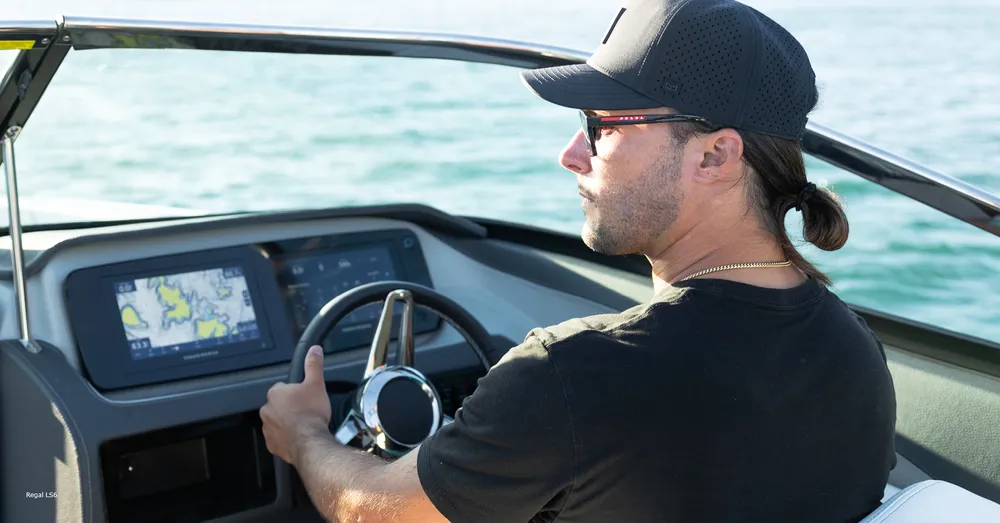
Developing an advanced, technical command over your watercraft is a continuous operational discipline rather than a one-time milestone. Across the Southeast’s premier inland waterways—whether navigating the high-density holiday traffic of Lake Lanier, tracking deep-water lines on Lake Allatoona, or maneuvering the expansive shorelines of Lake Martin, Lake Oconee, and Lake Keowee—relying on basic, instinctive handling is a liability. Wind gradients, cross-cutting displacement wakes, and changing channel depths demand precise mechanical and cognitive inputs from the helm.
By implementing five structured, skill-focused habits, captains can eliminate close-quarters anxiety, protect their hulls from structural fatigue, and maintain absolute control in any environment.
1. Enroll in Certified Marine Navigation and Safety Courses
Relying solely on informal peer advice or trial-and-error at the public boat ramp compromises safety and limits your understanding of maritime law.
- Structural Foundational Training: Prioritize formal coursework certified by the National Association of State Boating Law Administrators (NASBLA) or the U.S. Coast Guard Auxiliary.
- Operational Value: Professional training establishes an accurate baseline in right-of-way navigation rules, sound signaling protocols, dynamic weather interpretation, and emergency casualty management. This formal grounding allows the helm operator to read complex river channels and multi-vessel intersection vectors with absolute clarity.
2. Execute Low-Traffic "Idle-Only" Maneuvering Drills
Many handling errors and gelcoat fractures occur because captains rely on excessive speed and continuous throttle inputs to correct a poor approach vector near docks or slips.
- The Open-Water Warm-Up: Utilize quiet, low-traffic weekday mornings to practice deliberate close-quarters drills. Head to an open pocket of water or a solitary mooring buoy to isolate how wind drift and current vectors manipulate your hull's tracking attitude when the transmission is in neutral.
- Pulse Throttle Mechanics: Train yourself to maneuver exclusively through short, brief bumps of power—shifting into gear for one to two seconds, then instantly returning to neutral. Allowing the vessel’s natural hydrodynamic momentum to execute the rotation prevents over-correction, stabilizes your approach, and ensures safe control when backing into tight slips.
3. Master the Geometry of Essential Marine Knots
Mooring lines function as structural extension systems for your hull. Relying on improper, slipping, or over-complicated knots directly endangers your watercraft when left unattended.
- The Core Technical Inventory: Every proficient captain must be capable of tying the cleat hitch, the bowline, the clove hitch, and the anchor hitch with muscle-memory speed.
- Mechanical Application: A correctly tied cleat hitch balances friction securely across the horns to absorb heavy wake loads, yet can be undone instantly under high tension without jamming. Conversely, a bowline establishes a fixed, non-slip loop that maintains its rated tensile strength under immense stress, but unlocks effortlessly when the load is removed.
4. Implement a Rigid Pre-Departure Diagnostic Routine
True pilotage competence extends beyond handling a steering wheel; it requires maintaining an accurate mechanical baseline of your vessel's electrical and propulsion continuities before casting off.
- The 10-Minute System Sweep: Establish a strict post-launch routine. Check your instrumentation display to confirm alternator voltage output is functioning properly (typically 13.5V to 14.5V) and that engine operating temperatures are stable.
- Fluid and Structural Validations: Manually check your bilge sump to ensure it is dry and that your automated bilge pumps are not cycling unexpectedly. Listen directly to the power plant under low load to identify irregular belt squeals, clicking relays, or excessive drivetrain vibrations that reveal underlying component wear before you commit to open water.
5. Adapt Handling to Match Hull and Propulsion Configurations
Boats handle fundamentally differently based on their specific drivetrain architecture, hull weight distribution, and aerodynamic profiles.
- Inboard vs. Outboard Dynamics: A heavy, ballasted inboard tournament wake boat utilizes a fixed tracking fin and a single rudder, reacting slowly in reverse and pulling strongly to one side due to propeller torque (prop walk). Conversely, an outboard or sterndrive platform steers by vectoring the actual thrust of the lower unit, delivering instantaneous directional response but tracking loosely in high crosswinds.
- Calibrate Your Inputs: Modernize your handling habits to align with your platform’s specific tolerances. For operators struggling with slow-speed maneuvering or heavy throttle play, scheduling a professional system overhaul or upgrading your controls restores your physical mechanical advantage.
Technical Frequently Asked Questions
What represents the single fastest method for an intermediate boater to sharpen slow-speed handling?
The most efficient strategy is practicing repeatable approaches at an empty courtesy dock or around a floating marker using idle-only clicks of power, focusing entirely on neutral coasting to let the boat's momentum do the braking.
Why is adding multiple redundant wraps to a cleat hitch considered a hazardous handling error?
Piling excessive loops over a cleat traps the rope against itself under high tension. This causes the line to bind and jam tightly, making it incredibly difficult to release quickly during a sudden drift or mechanical emergency.
Sourcing Authorized Technical Training & Systems Support
Refining your seamanship requires outfitting your hull with components and controls calibrated to exact manufacturer tolerances.
- Certified Systems and Rigging Calibration: If your binnacle controls experience shift lag, your steering linkages exhibit mechanical play, or your automated ballast pumps fail to drain cleanly, schedule a comprehensive multi-point diagnostic checkup with our factory-trained technicians at the Singleton Marine Service - Buford, GA division.
- Premium Pro Shop Equipment Sourcing: Visit our dedicated Parts - Buford, GA counter or fully stocked Pro Shop to secure high-tensile, double-braided nylon mooring lines, customized ground tackle, heavy-duty marine batteries, and replacement fenders.
- Propulsion Overhauls and Optimization: For captains managing aging outboards that lack modern digital networks or responsive low-end torque, our authorized Repower Mercury - Buford, GA and Repower Yamaha - Buford, GA specialists can replace your powerhead to install total handling control and peace of mind.
Corporate Credit and Fleet Allocations
What financial channels exist for financing a boat upgrade with advanced telemetry?
Our specialized Financing office provides customized loan configurations, allowing you to seamlessly bundle a high-performance modern hull, reliable outboards, digital joystick controls, and comprehensive Marine Insurance packages into a single plan.
Can I leverage my current boat's equity to fund a platform transition?
Yes. We coordinate transparent, market-accurate asset evaluations through our internal Sell / Trade division, making it highly efficient to liquidate your current watercraft and apply that value directly toward our inventory of New Boats or strictly inspected Used Boats.
How do I track upcoming events or get in direct contact with Singleton Marine?
To learn about our corporate footprint serving Southern mariners across Georgia, Alabama, and South Carolina since the late 1980s, visit our About page. You can monitor upcoming captain safety workshops and regional consumer rendezvous on our Events page, track continuous technical maintenance guides on our Blog, or see verified customer feedback on our Reviews page. To review long-term mechanical protection parameters, consult our Extended Service Contracts checklist, and find current promotions on our Specials page. For showroom maps and hours across all our regional dealer hubs, visit our Contact page.


